Amazonian mushroom reveals its true identity through historical research and scientific papers
· based on the channel Shroomverse
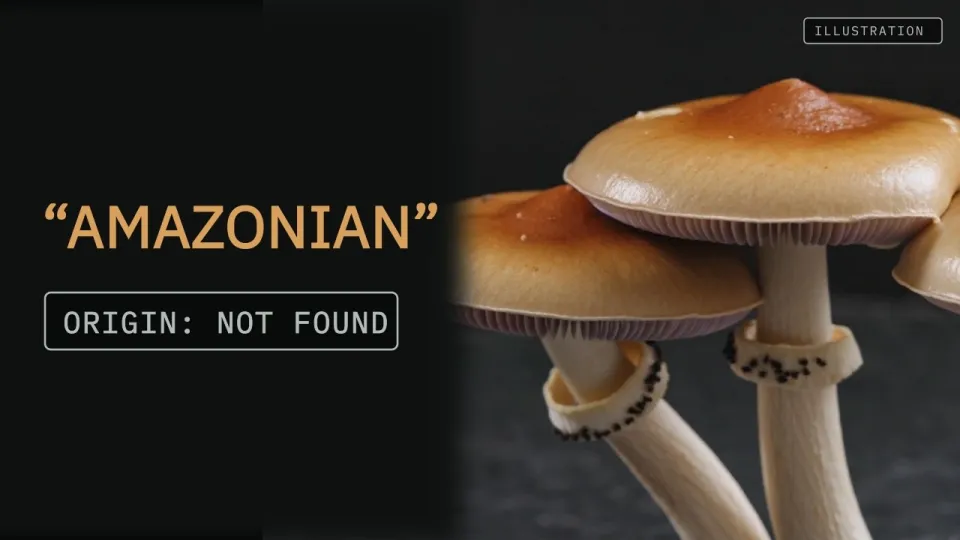
Video: Amazonian Mushroom: Following the Paper Trail Behind the Name
The Amazonian mushroom is often misunderstood due to historical misidentifications and confusion in scientific literature. By following the paper trail behind the name, it becomes clear that what has been called the Amazonian mushroom actually refers to several distinct species with rich cultural significance and complex taxonomy.
Historical Misidentification of the Amazonian Mushroom
The term "Amazonian mushroom" first appeared in early ethnomycological studies but was frequently assigned to various mushroom species native to the Amazon rainforest. Early researchers often lacked precise taxonomic tools, leading to multiple species being grouped under this single name. The confusion stems from overlapping local names and morphological similarities between species 02:15.
Taxonomic Clarifications Through Scientific Papers
Scientific papers tracing the Amazonian mushroom’s identity reveal a tangled history of classification. Researchers revisited herbarium specimens and field samples, correcting misclassifications dating back decades. Key publications from mycologists specializing in tropical fungi helped disentangle species identities, showing that the Amazonian mushroom includes members of different genera, some with psychoactive properties and others without 06:40.
Cultural Role of the Amazonian Mushroom in Indigenous Communities
Beyond taxonomy, the Amazonian mushroom holds cultural importance among indigenous groups. These communities have used the mushrooms for medicinal and ritual purposes for generations. Ethnographic studies document how local names and uses vary, contributing to the scientific confusion but also highlighting the mushrooms’ significance in Amazonian culture 11:05.
Modern Scientific Approaches to Species Identification
Recent advances in DNA sequencing have been pivotal in distinguishing species classified as Amazonian mushrooms. Molecular phylogenetics provides clarity that morphology alone could not achieve, confirming which species are psychoactive and which are not. These findings are essential for both conservation efforts and the sustainable use of these fungi 14:50.
The Importance of Accurate Naming and Research Transparency
The journey of the Amazonian mushroom's naming illustrates the importance of precise scientific documentation and transparency. By following the paper trail, scientists ensure that future research avoids past mistakes, enabling effective communication about these fungi in scientific and cultural contexts 18:20.
Conclusion
The Amazonian mushroom's identity has been clarified through diligent research tracing back to original scientific papers and indigenous knowledge. This process reveals multiple species under one name, cultural significance, and the necessity of modern methods for accurate classification. The channel Shroomverse provides an insightful breakdown of this complex history and taxonomy, emphasizing the value of thorough scientific inquiry.
Key takeaways
- Amazonian mushroom was initially misidentified in early scientific texts
- Multiple species have been confused under the name 'Amazonian mushroom'
- Paper trail reveals the taxonomic history and naming errors
- Cultural importance in Amazonian indigenous communities documented
- Modern research clarifies species distinction and nomenclature
Source: Amazonian Mushroom: Following the Paper Trail Behind the Name · Markdown version
Questions & answers
What is the Amazonian mushroom commonly mistaken for?
It is often mistaken for multiple different species due to early misidentifications and overlapping local names in the Amazon region.
Why is the taxonomy of the Amazonian mushroom complicated?
Because early scientific studies grouped several distinct species under one name without clear morphological or genetic distinctions.
How do indigenous communities use the Amazonian mushroom?
They use it for medicinal and ritual purposes, with different groups having unique names and uses that contributed to scientific confusion.
What modern methods help clarify the identity of the Amazonian mushroom?
DNA sequencing and molecular phylogenetics play a crucial role in distinguishing species and confirming psychoactive properties.